Saunas and recovery: what the research actually shows
The honest summary is more interesting than the marketing one, and it is the one that holds up when somebody checks it.
Search for saunas and recovery and you will be told that soreness falls by 47%, that heat shock proteins repair muscle, that lactate clears faster. Those numbers circulate between commercial sites and are, as far as we can establish, untraceable to a paper anyone can read.
Here is what the actual literature says, including the parts that do not suit us.
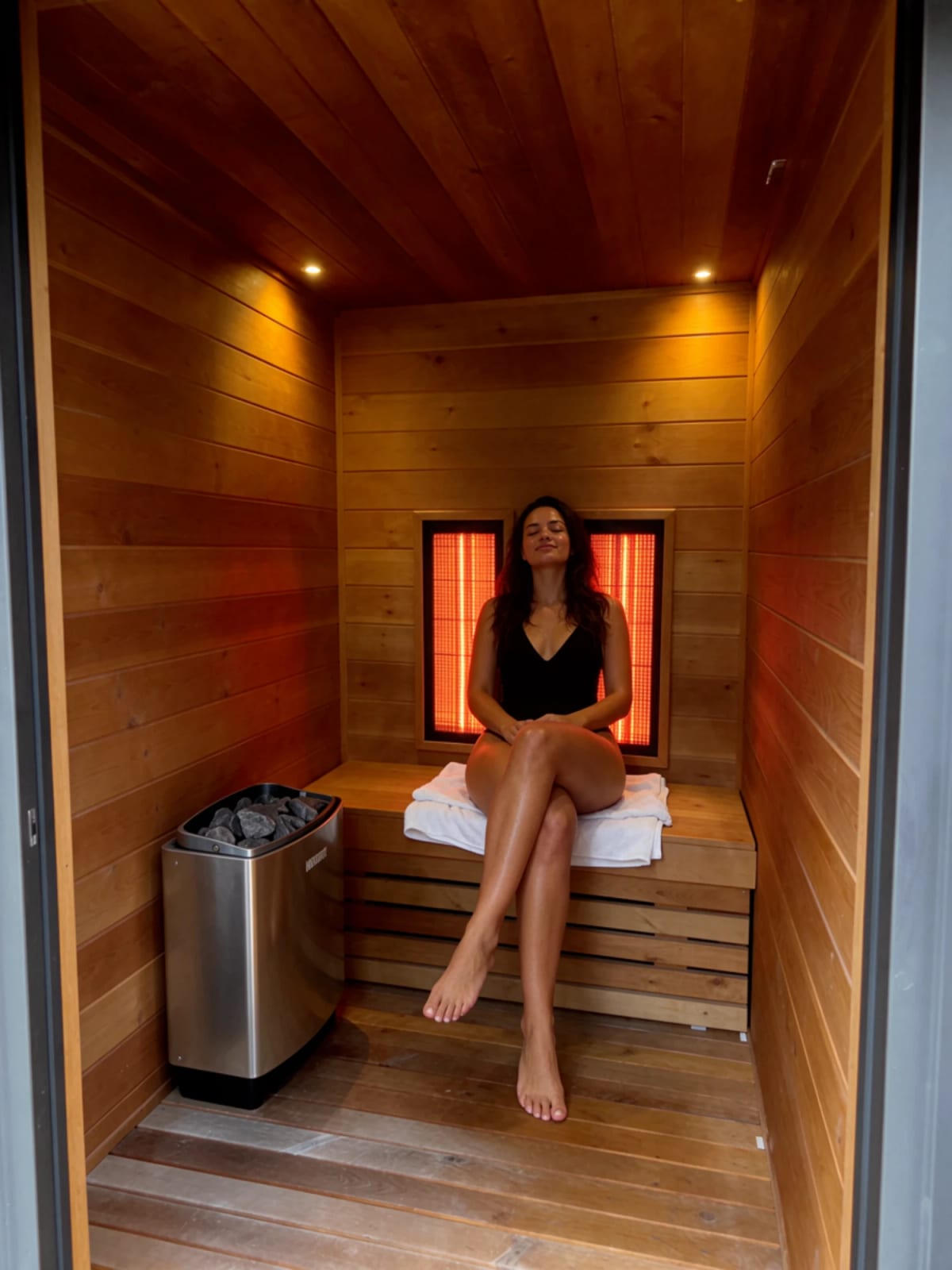
What holds up: soreness and how recovered you feel
The clearest finding is about perception, and perception is not nothing.
A 2022 trial in Biology of Sport put sixteen basketball players through resistance training and sent half to an infrared sauna afterwards. Compared with sitting quietly, the sauna group reported lower muscle soreness and higher perceived recovery, and lost less explosive performance in the hours after. Sixteen people, one session, against passive rest. A small study, and the authors do not pretend otherwise.
That is the shape of most of this evidence: small, short, and measuring how people say they feel.
What does not hold up: performance
This is the part the brochures leave out.
A 2025 systematic review in Sports Medicine – Open gathered fourteen studies of post-exercise heat exposure. Three randomised controlled trials and eleven crossover trials. On the hard outcomes, it found no effect on cycling performance and no effect on VO₂max. The designs and heating protocols varied so much that the authors would not even pool the results.
A separate multi-arm randomised trial in Physiological Reports (2025) looked at heart rate variability, a common proxy for recovery status, after regular post-exercise sauna use. It did not improve.
So: a sauna after training will probably make you feel better, and on current evidence will probably not make you perform better. Anyone telling you otherwise is either reading different papers or not reading any.
Why "feels better" is still worth something
Because adherence is the whole game. An athlete who finishes a hard session feeling wrecked trains worse the next day for reasons that have little to do with muscle physiology. If twenty minutes of heat means you turn up on Thursday instead of skipping it, that is a larger effect than anything a meta-analysis is going to detect.
It is also the honest reason most of our clients give, once they stop quoting the internet at us: it is the part of the day when nothing else is happening.
The mechanisms, briefly and with caution
Heat raises skin and core temperature, widens blood vessels and lifts heart rate into a range that looks, from the outside, a little like moderate exercise. That much is measured and uncontroversial. What it causes downstream in a recovering muscle is where the confident claims outrun the data.
- Blood flow. Real and measurable during the session. Whether it meaningfully speeds repair afterwards is not established.
- Heat shock proteins. Genuinely rise with heat exposure, and are genuinely involved in protein folding and cell stress. The jump from that to "faster recovery in humans" is made in marketing copy, not in trials.
- Lactate. Clears on its own within an hour of stopping, with or without a sauna. It is also not what makes you sore two days later. This one is simply wrong.
How people actually use it
From what clients tell us, not from a protocol:
- After the session, not before. Heat before training makes the training harder, which is a deliberate strategy for heat acclimatisation and a bad idea for everything else.
- Fifteen to twenty minutes. Longer is not better. It is just longer.
- Rehydrate properly. You lose fluid and you do not get it back by intending to.
- Not straight after a maximal session if you feel faint. Heat adds cardiovascular load to a body that has just had plenty.
Who should ask a doctor first
Anyone pregnant, anyone with a heart condition or unstable blood pressure, anyone on medication that affects heat tolerance or hydration. We build saunas. We are not qualified to clear you for one, and a company that sells them is the wrong place to ask.
If you want the rest of the evidence. The forty years of Finnish cohort data, and what the randomised trials have and have not confirmed, that is in what the research says about saunas and health.
A sauna you will actually use
Whatever the effect size, the session you skip does nothing at all. The argument for one at home is that it removes the trip.